Why Docugym?
Private, Accurate Document AI for Your Enterprise
By Frank Sommers
•
February 21, 2026
Docugym's pragmatic approach to document AI grew out of years of hard-won experience at large US financial services companies.
Our clients handle millions of documents each year. Because documents feed downstream business tasks—loan underwriting, vendor onboarding, insurance processing—document-related errors compound into real business risk and losses. Manually processing those documents is both slow and error-prone: one large client's loan-processing department routinely misclassified more than 15% of loan documents by hand.
So every enterprise wants to automate. But the two things that make document automation actually usable—accuracy on your real, messy documents and keeping those documents under your control—are exactly where the easy options fall short. That is why we built Docugym.
Your documents shouldn't have to leave
Business documents are among the most sensitive data an organization holds: payroll records, tax forms, bank statements, insurance claims, government filings. For many organizations, sending those documents to an outside AI service is simply not an option—data-residency rules, regulatory constraints, and internal risk policies forbid it.
There is a second, quieter risk. When your document pipeline depends on a single outside model provider, that provider's decisions become yours: their pricing, their availability, their data-retention terms, their access policies. Anything you build on one external API inherits that exposure.
Docugym is built the other way around. It runs inside your environment—on-premises or in your private cloud—on open models you are never locked into. Your documents, and the models that read them, never leave your walls. And it's private, not DIY: Docugym is delivered as a turnkey deployment that your team uses through a simple API. There are no models to host and no infrastructure to run. Whatever changes upstream, your pipeline keeps working—on your terms.
Context matters
Privacy alone isn't enough; the system also has to be right. And real document automation is harder than a polished demo suggests.
Simple OCR isn't enough on its own. OCR can turn a page's pixels into text tokens. But was that piece of text—say, "20.00"—the number of hours worked in a week, or the hourly pay rate? Real-world extraction needs contextual understanding, where context is not only the visual document image but also the business workflow in which the document is used.
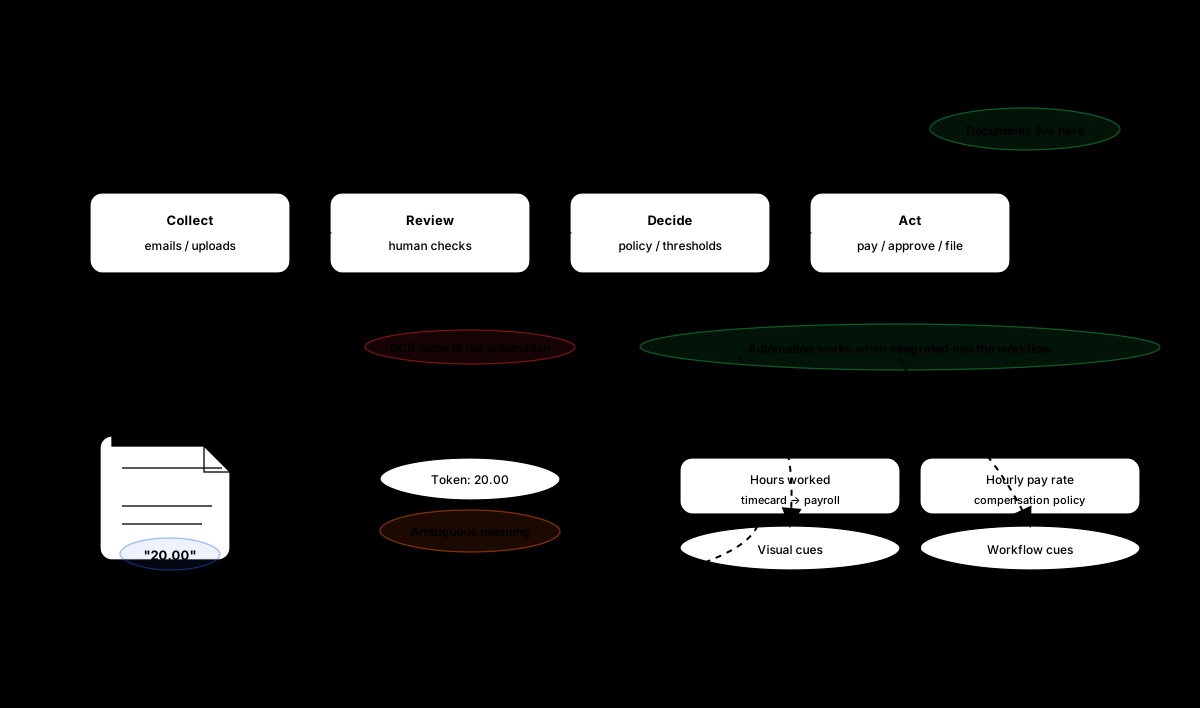
A more advanced approach is to hand each page to a large, general-purpose vision-language model (VLM) for zero-shot classification, extraction, and summarization. This works beautifully in a demo: upload a clean document image, prompt the model, and it identifies the document type, pulls out key entities, or summarizes the content.
That sleek demo falls apart on real business documents. Real paperwork is messy and wildly heterogeneous—in image quality, in resolution, and in type: there are thousands of distinct paystub or insurance-certificate formats. A model that dazzles on a carefully chosen sample stumbles on a random sample of the real thing.
It learns your documents—from a few examples
If zero-shot prompting doesn't hold up, can you adapt the system so it works better on the documents your business actually sees?
The usual answer is to assemble a large, high-quality labeled dataset and train or fine-tune a model on it. In our experience, most organizations have neither the dataset nor the appetite to build and maintain one—and no desire to become a machine-learning shop.
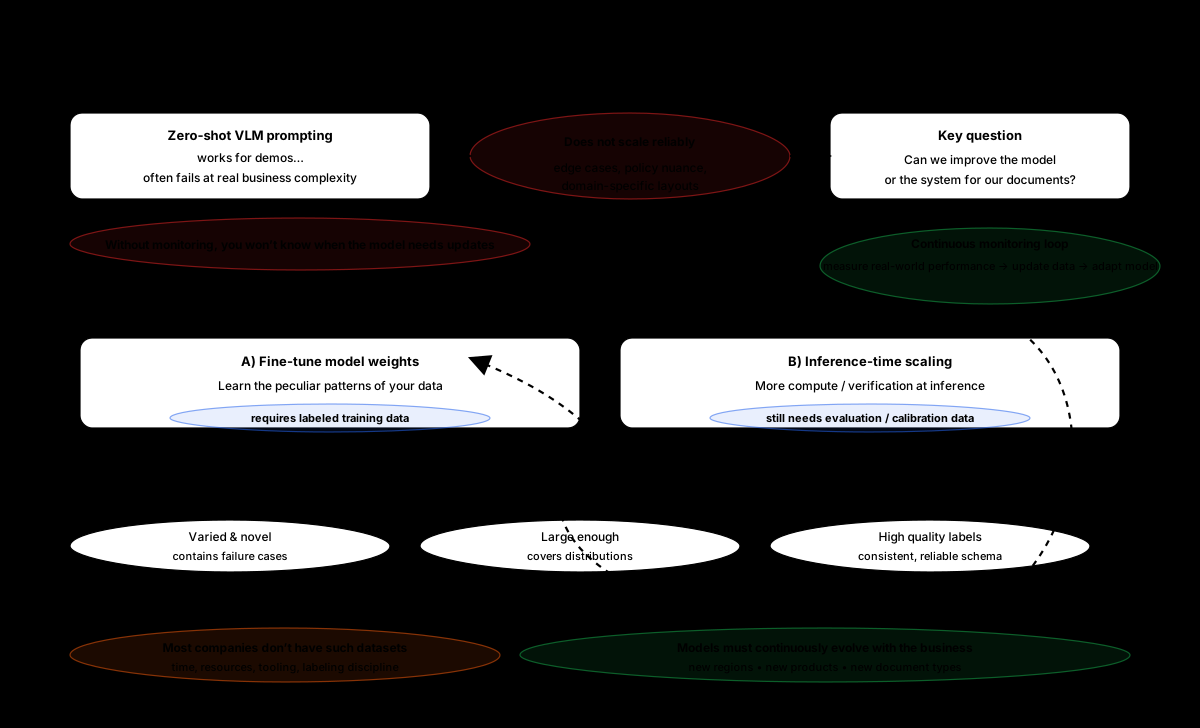
Docugym takes a lighter path. Instead of training, it learns your paperwork from a handful of examples per document type—no large dataset, no training runs, no data-science team. And because a business never stops changing, it keeps getting sharper from your team's everyday review and corrections. Open a new line of business or expand into a new region, and Docugym adapts as those new documents appear—without a retraining project you have to run, and without flying blind on whether the system still performs.
Documents come in sets
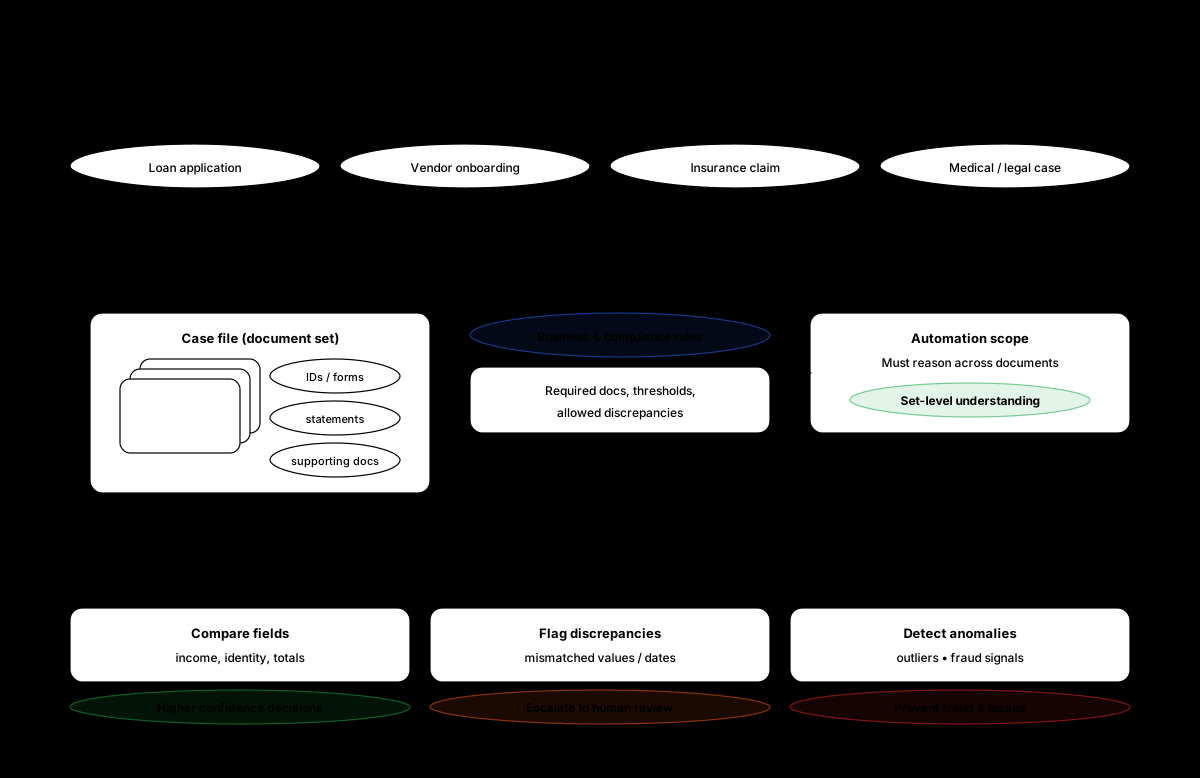
Real workflows rarely deal with a single document. Loan processing, vendor onboarding, insurance claims, and medical or legal cases all revolve around sets of related documents, and the exact set is governed by business and compliance rules. Useful automation has to reason across the set— comparing values between documents, flagging discrepancies, and catching anomalies and possible fraud. This is exactly the kind of error-prone, tedious work people do by hand today, where a single mistake can become a loss.
Docugym was built to solve all of this: accurate, private, and practical document AI that runs where your data already lives.
We'd be glad to show you how it delivers value inside your enterprise. Schedule a demo
© 2025-2026 Docusure, Inc. All rights reserved.